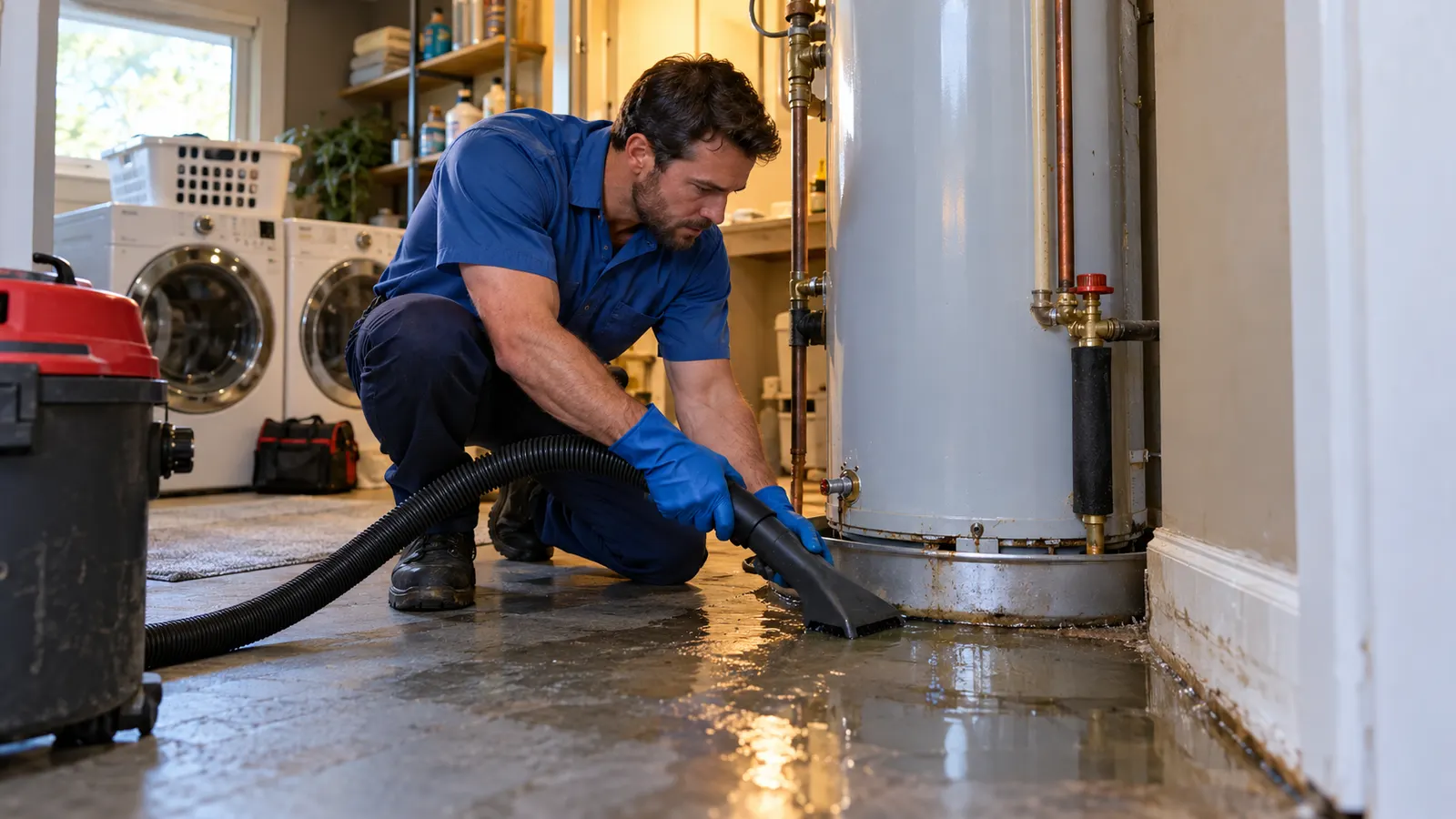
Follow the Water Beyond the Appliance Space
The table identifies places to investigate, not a diagnosis of the failed part. The source contractor verifies the appliance or connection. Our assessment follows the released water into building materials and explains what can be reached without additional access.
A Sudden Release and a Concealed Leak Leave Different Evidence
Water noticed during an overflow
A sudden release may leave a clear visible footprint through connected rooms. We ask when the water started, how it was stopped, and whether surface extraction has already happened. That history helps the crew check areas that may no longer look wet by the time an assessment is made.
Dampness found behind a cabinet or machine
A concealed leak may first appear as swollen trim, loose flooring, or damage inside a cabinet base. The visible spot may be only an edge of the affected structure. We discuss access to the wall or substrate and record any condition that suggests a separate mold assessment may be needed.
What Happens During On-Site Cleanup
Document the appliance area and nearby rooms
We photograph the building damage and check accessible floor and wall edges. The source location is recorded without assuming that it marks the complete boundary of the wet materials.
Extract and inspect the layers
Standing water is removed, and the crew evaluates pad, underlayment, trim, and cabinet components. Swollen or contaminated porous layers may need removal rather than surface drying.
Create access for remaining moisture
Where fixed finishes block the wet structure, we explain the openings needed to assess and dry it. Access decisions account for appliance connections and any work still required by the source contractor.
Dry and check before replacement finishes
Equipment is arranged for the exposed materials, with repeat readings used to track progress. Replacement flooring, trim, and cabinet repairs follow review of the remaining structure's condition.
Bixby Utility Rooms and Kitchen Floor Structures
In a slab home, an appliance release can move beneath a floating floor or soak pad at an adjoining bedroom doorway. Concrete at the visible source does not mean the loss affected only an easily cleaned hard surface. We check connected finishes and ask about earlier slab dampness that may complicate the new event.
Pier-and-beam homes may also have water below the appliance area, especially if it escaped through a penetration or damaged floor section. Winter freezes near garage utility areas can lead to a line failure, while Oklahoma's humid summers can make enclosed cabinet spaces harder to dry without suitable access and moisture removal.
Laundry rooms and closets are often small enough that equipment and access routes need careful planning. We discuss where furnishings or household items can go so the crew can revisit the same reading locations without moving the appliance repeatedly or blocking the doorway.
Cabinet Bases and Floor Layers That Cannot Be Seen From Above
Water entering beneath a cabinet can wet absorbent toe kicks or composite panels without leaving the cabinet doors visibly damaged. The crew checks accessible edges and explains where the construction prevents inspection. A surface wipe around the front does not show the condition of the area underneath.
The floor below an appliance can also differ from the room's visible finish. Underlayment, adhesive, and the substrate may need separate assessment. If material is lifted or removed, we photograph those layers and discuss how the repair will meet the remaining floor. Retaining an appliance does not automatically mean the building materials around it can also remain.
Separating Source Repair From Damage Documentation
We keep photos of the affected building materials, moisture readings, and drying logs for the restoration work. Cabinet openings, flooring removal, and damaged trim are recorded by location. These notes help show what the water affected even after the machine has been repaired or replaced.
We work with your adjuster on the building-damage scope and recorded conditions. Your carrier decides coverage and claim approval. Keep appliance service reports and any source-repair invoice with your claim information so the failed component can be distinguished from the cleanup and repairs to the surrounding room.
Appliance Spill Restoration Questions
Can a dishwasher leak reach the next room under the flooring?
Yes. Continuous flooring and underlayment can provide a route beyond the kitchen opening. We check accessible transitions and adjoining room edges where the water may have traveled. The visible puddle in front of the appliance does not show the complete footprint beneath the finish.
Does replacing a water heater resolve the wet utility-room walls?
Replacement corrects the appliance issue but does not show that nearby building materials have dried. Lower drywall, insulation, flooring, and adjacent rooms may still require cleanup or measurement. Coordinate the source work with the restoration assessment so the affected layers remain accessible where needed.
Will the crew disconnect appliances to reach water?
Connections and electrical conditions need appropriate handling by the relevant trade. We discuss access and coordinate the work rather than assume a machine can be moved safely. Tell us whether an appliance technician or plumber has already attended and what source work remains unfinished.
Can a cabinet look intact while its base needs removal?
Yes. A cabinet's visible face can conceal an absorbent base or toe kick that has swollen or retained moisture. We assess the accessible construction and record the affected components. The removal discussion focuses on those findings rather than treating every cabinet surface as equally damaged.