
Crawlspace Water Removal for Pier-and-Beam Homes
Standing water beneath a pier-and-beam home in Bixby can wet the underside of the floor without leaving a puddle in the living room. Joists, subfloor panels, insulation, and the vapor barrier need separate checks. A dry floor surface upstairs does not describe the conditions below it.
Bixby Restoration Champ removes crawlspace water and assesses accessible floor-support materials for drying. When you call, describe the access opening, any water visible underneath the house, and changes such as damp odors or soft flooring. The work plan depends on access, contamination, and the source of the water.
Call (918) 675-5611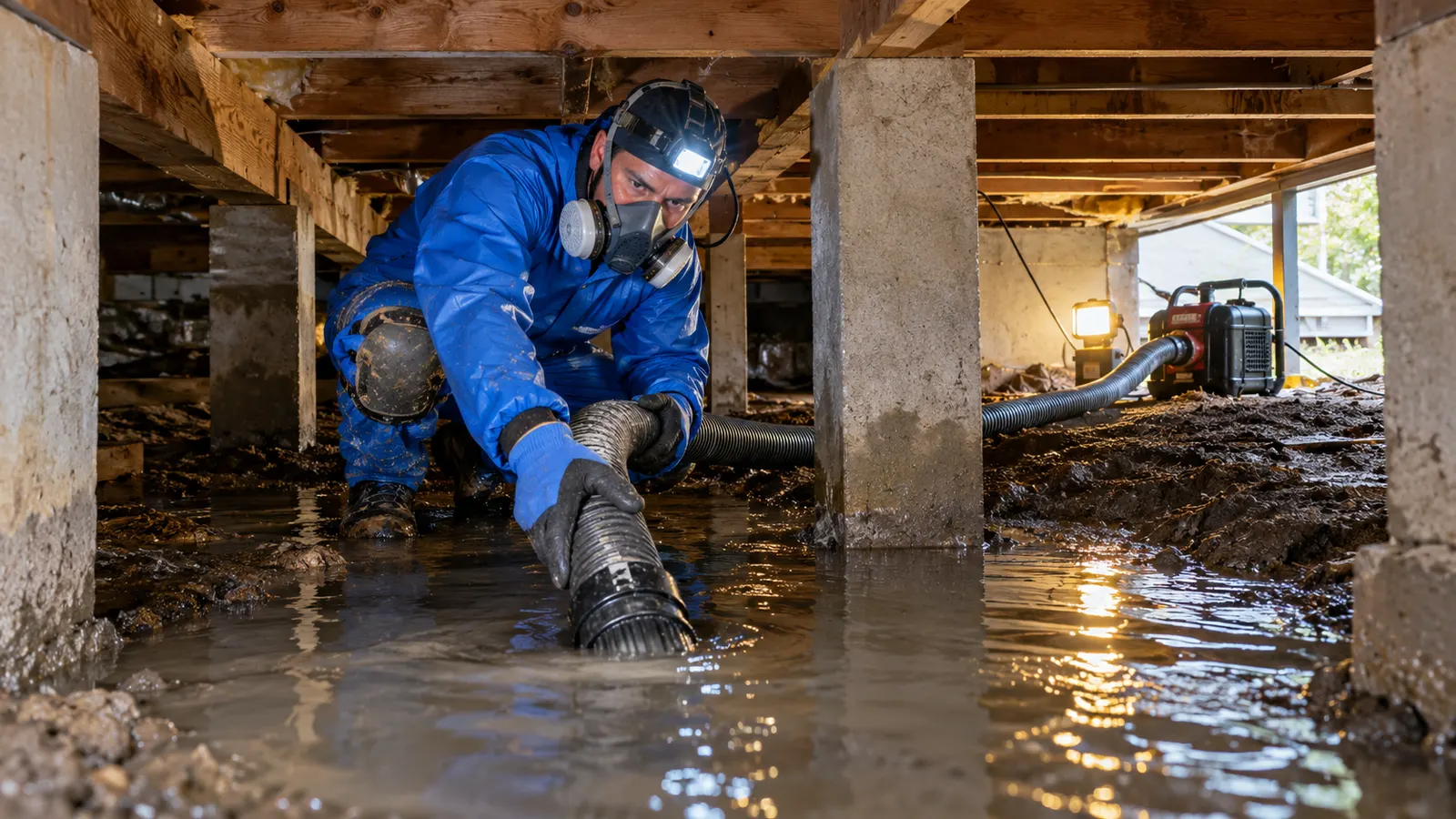
What the Crawlspace Assessment Covers
| Area assessed | What we look for | Why it changes the work |
|---|---|---|
| Standing water and soil surface | Water depth, debris, source route, and access limitations | Determines removal approach and whether contamination controls are needed |
| Joists and underside of subfloor | Accessible moisture patterns and visible material damage | Defines drying locations and areas needing closer inspection |
| Under-floor insulation | Saturation, displacement, or contamination | Wet insulation may block assessment and require removal |
| Vapor barrier | Tears, displaced sections, trapped water, and debris | Its condition can affect access and ongoing ground-moisture control |
We distinguish what can be reached from what remains concealed. Low clearance, ductwork, stored materials, and disconnected access areas can limit the assessment. A report should identify those limits rather than imply that every floor bay was inspected from a single opening.
Water Sources Beneath Oklahoma Raised Floors
Winter freezes can split exposed supply lines below older pier-and-beam homes. The leak may continue unnoticed until water collects beneath the house or the floor above begins to change. The source needs repair, while the restoration assessment follows the water across soil and into nearby floor components.
Spring runoff can enter a poorly drained crawlspace from outside. Around Bixby's river bottomland, a high water table or persistent ground moisture can also complicate the conditions beneath the building. We ask whether water appears only after rain, remains between storms, or began after a specific line failure.
The answers influence the cleanup plan but do not replace a source assessment by the appropriate contractor. Removing water after one event does not resolve a continuing drainage or ground-moisture condition. That distinction matters before new insulation or other floor finishes are installed.
Removal Before Under-Floor Drying
Establish access and assess hazards
The crew reviews the opening, clearance, utilities, and water conditions before entering. Crawlspace work needs equipment and protection suited to the confined access and the possible contamination present.
Extract water and handle affected materials
Standing water is removed with an approach matched to access and depth. Wet insulation, contaminated debris, or unsuitable barrier sections are assessed for controlled removal so the remaining structure can be reached.
Check joists and subfloor locations
Moisture readings are tied to identifiable accessible locations. The crew checks whether the wet footprint extends beyond the standing-water area and whether the upstairs floor also needs investigation.
Arrange drying and follow-up checks
Air movement and moisture removal are planned for the under-floor conditions. Progress is measured in the remaining building materials, and access limitations stay part of the record.
The Vapor Barrier Is Part of the Assessment
A vapor barrier can be torn, displaced, covered with debris, or positioned over water that remains trapped beneath it. We document its visible condition as part of the loss. Pumping water from one exposed low point may not address every pocket concealed by a damaged sheet.
Barrier replacement or correction needs coordination with the work that controls ongoing ground moisture. We discuss what the cleanup exposed and which separate measures may be needed before the structure is treated as ready. A new sheet over wet debris is not a substitute for removing the water and assessing affected materials.
- Record damaged or displaced barrier areas before removal.
- Check for water pockets where accessible.
- Keep the barrier discussion separate from moisture readings in wood.
- Coordinate any replacement with source and drainage work.
Connecting the Crawlspace to the Rooms Above
Water below the house and damage above it can belong to the same loss. We ask about cupped floorboards, loose finishes, or changes around floor penetrations, then assess the accessible materials involved. The condition of the joists, subfloor, and finish floor should not be treated as one interchangeable reading.
Where damage extends into occupied rooms, the work may need coordination across both sides of the floor. Removing material above can affect access below, and replacing under-floor insulation can conceal areas that still need measurement. We explain the sequence so each part of the structure remains accessible until its condition has been reviewed.
Records From an Area the Owner Cannot Easily See
Crawlspace photos and location notes help make the work understandable without asking you to enter the space. We record visible water conditions, accessible joist and subfloor readings, and materials removed. Drying logs identify the locations that were rechecked and any areas that remained inaccessible.
We work with your adjuster on questions about the observed loss and restoration work. The insurer decides coverage and claim approval. Keep source-repair or drainage records with the claim information, and ask for clarification if a note describes an inspection limit rather than a completed check.
Under-Floor Water Removal Questions
Can the floor upstairs stay dry while joists underneath are wet?
Yes. Different layers can have different moisture conditions, especially when water collects beneath the house rather than flowing over the finished floor. We assess the accessible underside separately and discuss whether changes in the room above warrant additional investigation of its floor layers.
Does a torn vapor barrier explain every crawlspace puddle?
No. Barrier condition is one part of the assessment, not proof of the water source. A line failure, outside runoff, or persistent ground moisture may also be involved. The cleanup record should distinguish the observed barrier damage from conclusions that require a separate source or drainage assessment.
Will water removal include entering every crawlspace bay?
Access depends on clearance, utilities, obstructions, and connections between areas. We identify which locations can be inspected and record limitations. If another opening is needed, that should be discussed rather than assuming one access point provides a view of the entire underside of the building.
Should under-floor insulation be replaced before wood readings stabilize?
Replacement can conceal locations that still need checking and restrict drying access. The work sequence should account for remaining moisture and material condition before insulation is installed. We discuss the relevant readings and any source work that still needs completion in that part of the floor.
Arrange an Under-Floor Water Assessment
Call with the access location, visible water conditions, and any changes in the floor above. We will discuss removal, material checks, and access for drying.
Call (918) 675-5611