
Ceiling and Attic Water Damage From HVAC and Pipe Leaks
A ceiling stain in a Bixby home can be the lowest visible point of a much larger attic loss. Water from a condensate overflow, sweating ductwork, or an attic supply line can soak insulation and travel along framing before it reaches the room below. Sagging drywall needs a controlled assessment before anyone works underneath it.
Bixby Restoration Champ removes affected insulation and damaged ceiling materials, checks accessible framing, and plans drying around the route the water followed. Tell us whether the ceiling is sagging, when the stain appeared, and whether equipment or a supply line sits above the affected room.
Call (918) 675-5611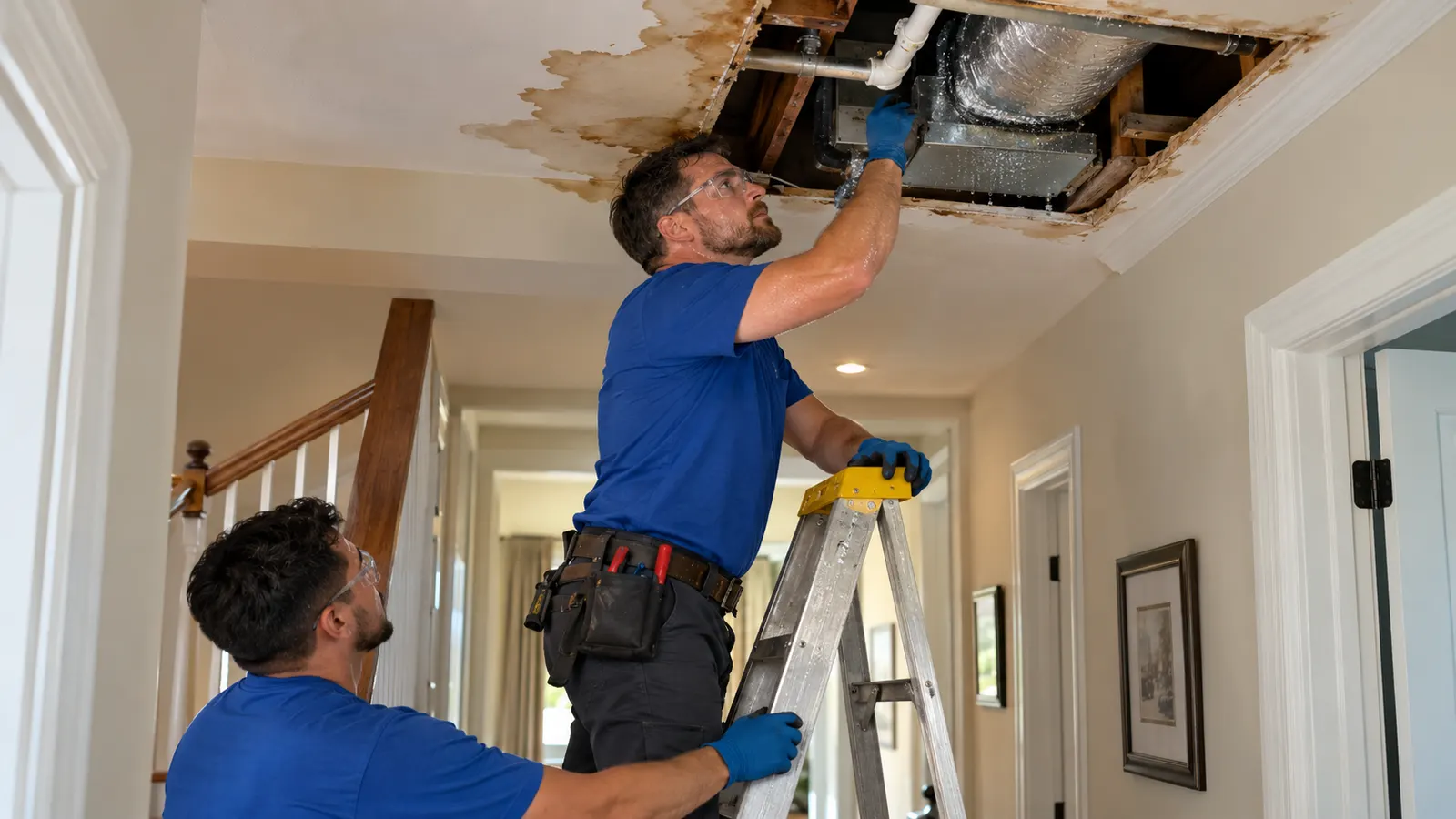
Keep Clear of Sagging or Unstable Drywall
Do not stand under a bulging ceiling, press on the wet area, or climb into an attic with uncertain footing to inspect it. Water can weaken gypsum board and add weight to insulation above it. The safe inspection route may be different from the doorway directly below the stain.
- Keep occupants out of the area beneath sagging, cracked, or falling ceiling material.
- Mention ceiling lights, fans, outlets, or other electrical equipment near the wet area.
- Describe visible changes from a dry position rather than puncturing a bulge.
- Tell the crew where attic access is located and whether that route is usable.
If water has reached electrical equipment, safe electrical access needs attention from the appropriate utility or electrician. The restoration crew assesses the damaged building materials after the work area can be approached. Photos taken from a safe location can help record conditions without entering the room.
Three Different Attic Moisture Sources
| Possible source | Damage pattern to investigate | Separate source work |
|---|---|---|
| HVAC condensate overflow | Wet insulation or ceiling near the cooling equipment or drain route | An HVAC contractor checks the condensate system and operation |
| Sweating attic ducts | Repeated dampness beneath cold duct surfaces or nearby insulation | An HVAC assessment addresses insulation, air leakage, and condensation conditions |
| Attic supply-line leak | Water traveling from a line through framing into finished rooms | A plumber repairs the failed water line or connection |
The pattern guides inspection but does not show the cause by itself. A ceiling below HVAC equipment can also receive water from another route. We document the building damage and accessible moisture conditions while the appropriate trade verifies and corrects the source.
Long, humid Bixby summers increase attention to condensate and duct sweating. Hard freezes create a different risk when attic lines lose heat protection or the house loses power. The season helps frame the questions, but the on-site evidence determines the removal and drying scope.
Wet Insulation Can Conceal the Damage
Insulation can hold water against ceiling drywall and framing while only a small stain is visible below. Saturated or compressed insulation may require removal so the remaining structure can be inspected and dried. The crew discusses how that material will be reached and contained during removal.
We check accessible adjacent framing and the ceiling area beyond the first opening. Water may follow a joist or a penetration before dropping into another part of the room. Removing only the stained patch can leave damp materials enclosed at the edge of the repair.
Attic access also has practical limits. Finished storage, ductwork, low roof sections, and concealed electrical components can restrict inspection. We explain which areas are accessible and which openings are needed instead of describing an unseen cavity as fully assessed.
Drying Above and Below the Ceiling
Assess the overhead structure
We photograph ceiling damage and identify accessible wet insulation, framing, and finish layers. The removal plan accounts for the condition of overhead materials and the occupied space underneath.
Remove unsuitable layers and inspect the route
Wet insulation and weakened drywall are handled through controlled access. Exposed materials allow moisture checks and reveal whether water has reached a wall cavity or another ceiling bay.
Check the room below
A ceiling leak can also wet carpet, wood flooring, cabinet tops, or the lower wall. We follow those connections so the work is not limited to the overhead opening.
Confirm readiness for ceiling repairs
The crew records drying progress in the remaining accessible structure. Source repairs and any necessary electrical work need coordination before replacement insulation and drywall enclose the area.
When Stains Return After a Previous Repair
A stain that returns after painting may indicate an unresolved moisture source or a wet structure that was closed too early. Tell us about previous condensate work, roof-related repairs, or line failures above the room. The history helps distinguish a new release from a recurring condition.
We do not treat repainting as a drying method. The structure needs assessment for retained moisture and physical damage, while the source receives attention from the appropriate trade. A repair plan should account for both the accessible evidence and the limits of what can be seen through the existing opening.
An Overhead Loss Record for Your Adjuster
We document ceiling conditions, the wet insulation or drywall removed, and moisture readings from accessible framing. Drying logs track the remaining structure. Photos before and after controlled opening help explain why the work extended beyond the stain visible from the floor.
We work with the adjuster on questions about the affected materials and restoration scope. Coverage and claim approval are decisions for the insurer. Keep HVAC, plumbing, or other source-repair records alongside the damage photos so the separate work can be understood without combining it into one unexplained charge.
Attic and Ceiling Loss Questions
Can a ceiling leak affect a room away from the source?
Yes. Water can travel along framing, pipes, or insulation before it reaches an opening in the ceiling. We check the accessible route and adjacent areas rather than assuming the stain is directly beneath the failed component. Describe every room where a mark or drip appeared.
Will paint seal a dry-looking ceiling stain permanently?
Paint does not show that the structure is dry or that the source has been corrected. We assess retained moisture and damaged materials before repair finishes are applied. The appropriate source contractor also needs to address the condition that allowed water to reach the ceiling.
Can attic insulation be inspected from the room below?
An opening may reveal part of the affected insulation, but it does not show the entire attic. We explain the accessible inspection area and whether attic entry or another controlled opening is needed. Inspection limits should remain clear in both the work discussion and the damage record.
Do sweating ducts always mean a supply pipe is leaking?
No. Condensation forms under different conditions from a failed water line, and the damage pattern alone cannot confirm the cause. An HVAC contractor evaluates duct and cooling-system conditions. Our crew assesses and restores the insulation, drywall, and framing affected by the moisture.
Call About a Wet or Damaged Ceiling
Describe the stain, any sagging, and the equipment or rooms above it. We will discuss a damage assessment and the access needed for removal and drying.
Call (918) 675-5611