
Why Homes Near the Arkansas River Get Water Damage at the Floor Line
In Bixby river bottomland, a damp wall base can be the first visible sign of a larger moisture problem. Carpet pad, slab edges, and the bottom of drywall need separate checks because a small stain does not reveal how water entered or how far it traveled.
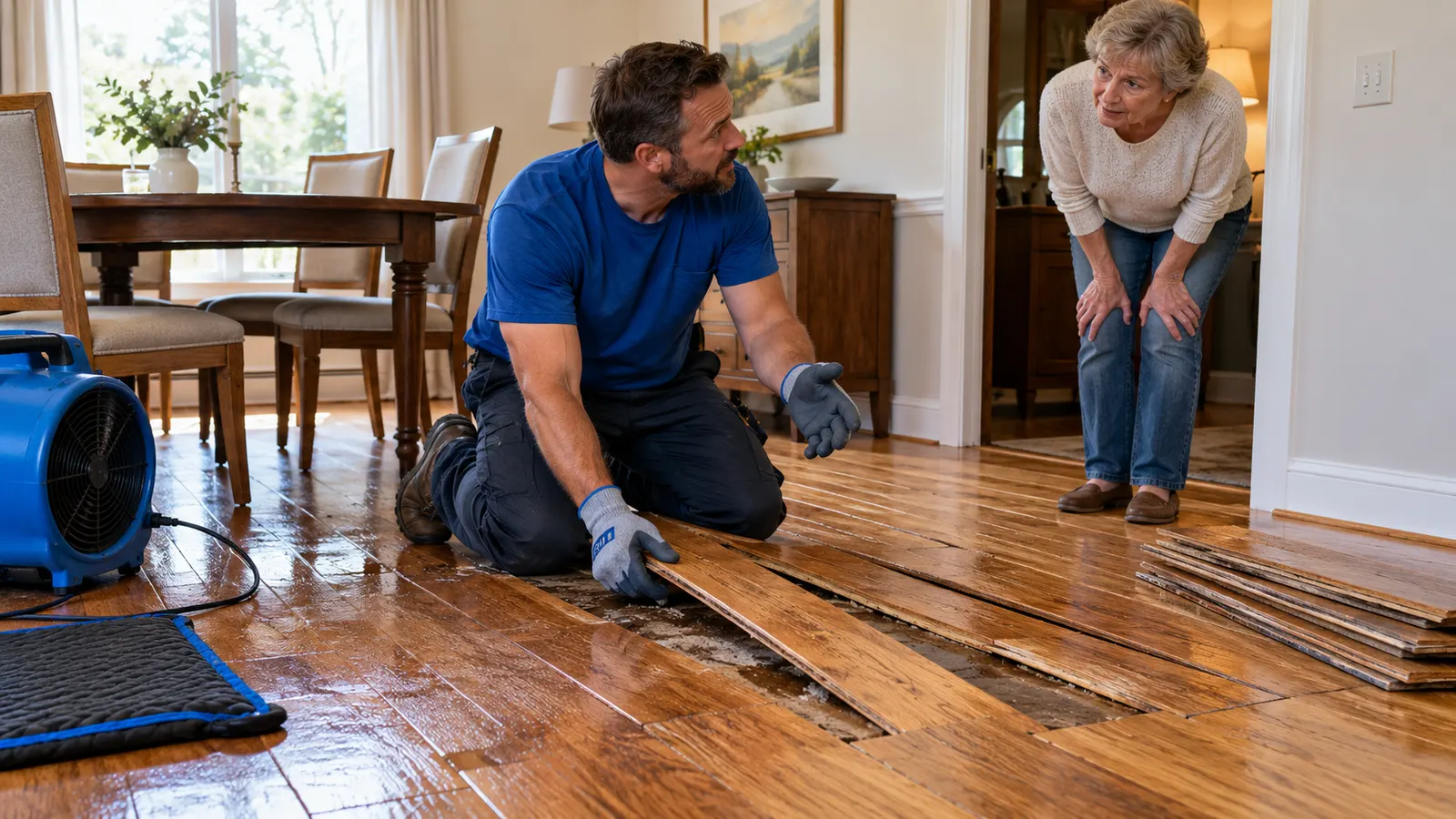
What a damp baseboard can tell you
Swollen trim, a dark carpet edge, or a musty cabinet base points to a place worth checking. It does not identify the source on its own. Water from a dishwasher can reach the same floor line as water entering at an exterior doorway. A long-standing damp patch near a slab edge needs a different investigation from a fresh appliance overflow.
Look for a pattern without pulling materials apart yourself. Note whether the dampness follows an outside wall, crosses several interior doorways, or sits beneath one fixture. Write down recent heavy rain, a plumbing repair, or an air-conditioning overflow. That timeline helps the inspection focus on plausible routes rather than assuming every wet baseboard comes from the river.
Photograph the edge of the room and the nearby floor. Include the wall above it so changes in stain height remain visible. If you put furniture back in front of the patch too soon, the damp area may become harder to inspect and airflow around the surface may be reduced.
River bottomland changes the questions we ask
Much of Bixby's low-lying ground sits near the Arkansas River, where a high water table and wet soil can affect slab moisture. After prolonged wet weather, the inspection may need to consider conditions below and beside the floor as well as water released inside the house. The same appearance can have more than one cause.
A slab is not a guarantee that the floor finish stays dry. Moisture can move through concrete or enter around an edge, while carpet pad and wood trim hide the early evidence. Lot grading that directs rain toward a new home can add another route. Check what happened outside during the storm, including water near door thresholds and the base of exterior walls.
These concerns also matter in Jenks along the Arkansas River floodplain, where hardwood and custom cabinetry can conceal a damp edge. A technician should explain which observations support a source theory and which checks still need to happen. A wet reading is evidence of moisture, not proof of a particular entry point.
Separate inside leaks from outside water
A washing-machine hose, an ice-maker connection, and a water heater can release water that spreads beneath a floor covering. If plumbing may be involved, a plumber needs to inspect and repair the source. Our work deals with the resulting wet materials. We do not locate or repair a leaking supply line beneath the slab.
Outside runoff brings different concerns. Water that crosses soil, a driveway, or storm debris may carry contamination into carpet and the bottom of walls. Its condition and route affect cleaning and removal decisions. Do not assume rainwater is clean simply because it began as rain, and keep people and pets away from contaminated wet flooring.
When a doorway is the entry point, inspect beyond the first wet rug. Water can travel under a floating floor or follow a low area into a hallway. Flood and storm water cleanup begins by tracing that route, removing standing water, and assessing the materials that were exposed.
Check the layers beneath the finished surface
A floor is more than the layer you walk on. Carpet has backing and often pad beneath it. Hardwood may sit over concrete or a wood subfloor, with adhesives or underlayment between. Each layer can hold moisture differently. A surface reading alone may miss a wet layer that has little chance to dry through the finish.
For water-damaged carpet, hardwood, and subfloor cleanup, the assessment considers the source, the time materials stayed wet, and signs of separation or swelling. Some wet pad needs removal even when the carpet face looks usable. Some wood can be monitored during drying, while lifted boards or damaged adhesive may require a different scope.
Cabinet toe kicks deserve attention too. Water can collect behind the removable strip at floor level, wet the cabinet base, and remain hidden after the room is wiped down. Access should be planned so the inspection can reach the damp area without unnecessary damage to nearby finishes. Take photos before and after any agreed removal.
Use readings to decide what happens next
Moisture meters help mark the extent of the wet area. The technician checks several points instead of taking one reading at the stain. Nearby unaffected material can provide a useful comparison, and the type of meter must suit the surface being checked. Different materials and metal beneath a surface can affect how a reading is interpreted.
Thermal imaging may show a temperature difference along the wall base, but it is a screening tool rather than a moisture test. The next step is to verify the area with appropriate readings and observations. Ask where measurements were taken and how the crew will return to those locations during drying.
For persistent slab moisture, the source conditions need attention alongside the damaged finish. Replacing baseboard without addressing ongoing dampness can leave the same problem behind new trim. The restoration plan should distinguish a one-time spill from recurring moisture and identify when a plumber or another building specialist is needed.
Dry before installing replacement flooring
Extraction removes water that equipment can recover. Dehumidification and planned airflow then address moisture remaining in accessible materials. Measured structural drying uses logged checks to follow the change, particularly at wall bases, wood framing, and subfloors. The equipment plan may change if an area stays wet while the rest improves.
Do not use the return of normal room humidity as the only sign that a floor is ready. A dry room can still contain damp wood or a wet layer under a covering. Replacement flooring also has its own installation requirements. Those requirements should be checked before a new finish traps moisture against the slab or subfloor.
If boards have cupped, avoid deciding on sanding while the wood is still wet. The final shape and condition need reassessment after drying. The repair discussion should cover what can remain, what has changed permanently, and whether the source has been corrected. This avoids making a cosmetic decision before the material condition is understood.
Keep a record of weather and floor changes
Save dated pictures of swollen trim, damp carpet edges, and any visible entry route. A simple note that heavy rain occurred before the patch appeared is more useful than an unsupported statement about floodwater. Keep records of plumbing checks, previous floor work, and recurring spots so the next inspection has context.
For an insurance discussion, photos and moisture logs help describe the affected materials and the work performed. They do not determine coverage. The insurer considers the policy and the cause, including whether water came from an indoor release, outside flooding, or a gradual condition. Ask your agent about the wording that applies to your own situation.
Before the room is closed up, ask to review the final readings and the proposed repair scope. In a river-bottomland home, a neat new floor edge should follow a clear moisture plan. If the dampness returns during the next wet spell, report the change with the date and the location rather than covering it with paint or a rug.