
HVAC Condensate Leaks and Sweating Ducts: Attic Water Damage in Oklahoma Summers
A brown ceiling patch during a dry Bixby summer may come from the cooling system above it. A blocked condensate drain, an overflowing pan, or moisture forming on cold duct surfaces can wet insulation and drywall long before water drips into the room.
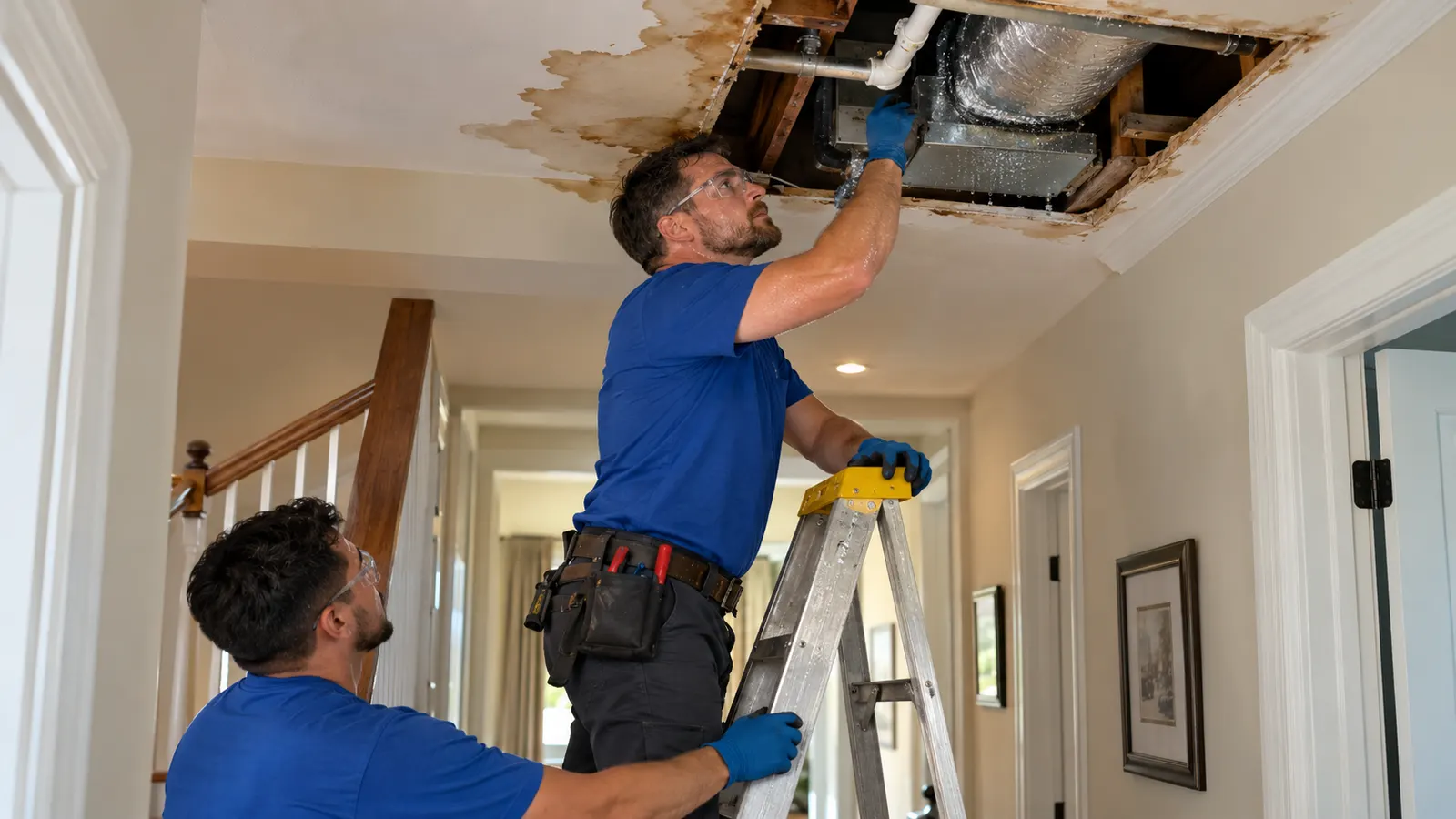
Why the cooling system produces water
Air conditioning removes moisture from indoor air as it cools the house. That water needs a working drain route. If the line blocks or the pan overflows, water can reach the platform, nearby insulation, and the ceiling below. An attic installation puts those materials beneath the equipment, so the first sign may appear in a bedroom or hallway.
A second route is condensation on cold surfaces. During Oklahoma's humid summers, warm moist attic air can contact cold duct surfaces and leave water on them. Damaged insulation or gaps around a duct can contribute. An HVAC technician should inspect the equipment and duct conditions rather than treating every ceiling patch as a roof leak.
The EPA moisture-control guide discusses condensate drainage and condensation risks. For a homeowner, the useful distinction is simple: water can escape from a drain system, or it can form on a cold surface. The source needs correction in either case before ceiling repairs are finished.
Read the ceiling from the room below
Look for a new ring, peeling paint, a soft seam, or a small drip around a vent. Note whether the air conditioner has been running for long periods and whether the patch grows on hot afternoons. Those details help narrow the investigation. A ceiling stain alone cannot identify whether the source is a drain, a duct, a supply line, or the roof.
Keep clear of sagging drywall. Do not stand on a chair under a bowed ceiling to press it or poke a drain hole. Wet insulation can add weight above the panel, and water may be near wiring. Move people out of the area and report the sagging when you call. An unstable ceiling needs a planned approach from a safe position.
Do not climb into an attic with wet decking, uncertain footing, or water near electrical components. Even a normally familiar access point may be unsafe during a leak. Take photos from the room below if you can do so without entering the affected area. Leave the overhead source inspection to the appropriate crew.
Stop new moisture before repairing the finish
An HVAC contractor handles the drain, pan, cooling equipment, and duct defects. If a plumbing supply line is leaking in the attic, call a plumber for that repair. We handle the water damage in the ceiling, insulation, and framing; we do not repair plumbing or service the air conditioner. Tell each contractor what the other has found.
Ask the HVAC contractor to record the source found and the correction made. A cleared drain and a dry pan are useful observations, but they do not show that the insulation below is dry. The equipment repair and the building-material assessment are separate parts of the job. Keep the service note with the restoration record.
Do not keep running a system that is visibly releasing water just to preserve room comfort. Ask the HVAC contractor what is safe to operate. In a tightly sealed new Bixby home, turning the system off may also change indoor humidity, so the drying crew needs to know the operating conditions when planning equipment.
Trace water across insulation and framing
Water does not always land directly beneath the source. It can follow a pipe, framing member, or the top of drywall before finding an opening. The assessment checks beyond the stained circle. A hallway patch may connect to wet insulation above a nearby bedroom, even when the bedroom ceiling has no visible mark yet.
For ceiling and attic water damage cleanup, the crew checks the condition of insulation, ceiling panels, and accessible wood. Wet insulation may need removal so the materials below can be examined and dried. Damaged drywall may also need removal, with protection for the room and a plan for debris handling.
Large attic spaces add access questions. In Owasso homes with vaulted ceilings and attic plumbing, the affected area can sit above a high finished room or beside a garage wall. The scope needs to account for reaching and inspecting that space, not just repainting the spot visible from the floor.
Understand what meters and thermal images show
A thermal camera can help locate a temperature pattern across a ceiling or wall. Cooler areas may deserve attention, but air leakage and the cooling system itself can also change surface temperatures. The crew verifies suspected wet areas with moisture readings and observations. A colorful image should be part of the inspection record, not the only evidence.
Moisture checks at accessible framing and drywall help define the affected area. The technician records locations so later readings can be compared with the first set. Where a cavity cannot be assessed from the room surface, access may be needed. The reason for an opening should be explained before work proceeds.
After removal and extraction where appropriate, structural drying of exposed materials uses airflow and dehumidification. Summer heat does not guarantee that an enclosed ceiling will dry on its own. The important question is whether moisture is leaving the actual wet materials at the measured locations.
Deal with recurring dampness and visible growth
A ceiling that has been damp repeatedly needs more than a fresh coat of stain-blocking paint. Tell the crew about earlier rings, musty smells, or previous drain clogs. The duration and recurrence help guide the assessment of drywall, insulation, and nearby wood. Some porous materials may need removal rather than drying in place.
If visible growth is present, avoid brushing it into the room or aiming a household fan at it. Mold removal and remediation may involve containment, HEPA air cleaning, and removal of affected porous material. Correcting the moisture source remains part of preventing another damp area after cleanup.
The EPA home mold guide recommends keeping indoor humidity below 60%, ideally 30–50%. A room humidity reading is useful for ongoing moisture control, while material readings still determine the drying progress of wet framing or drywall. The two measurements answer different questions.
Plan the ceiling rebuild after drying checks
Before closing the ceiling, review which insulation and drywall were removed and which framing areas were monitored. The final readings should relate to the locations that were wet. The HVAC or plumbing source correction should also be documented. Rebuilding without that information can hide a recurring drip above a new finish.
Repair planning may include insulation replacement, drywall hanging, finishing, texture, and paint. A small visible stain can require access beyond its outline, especially where insulation has spread the water. Ask for a room-specific explanation of the scope, including protection for furniture and the route used to remove debris from the house.
Keep before-and-after photos, drying records, and source-repair notes for any insurer discussion. Coverage depends on the policy and cause, including whether the event was sudden or developed over time. Report new staining during the next cooling cycle. A repaired ceiling should be checked for fresh moisture if the HVAC system begins dripping again.